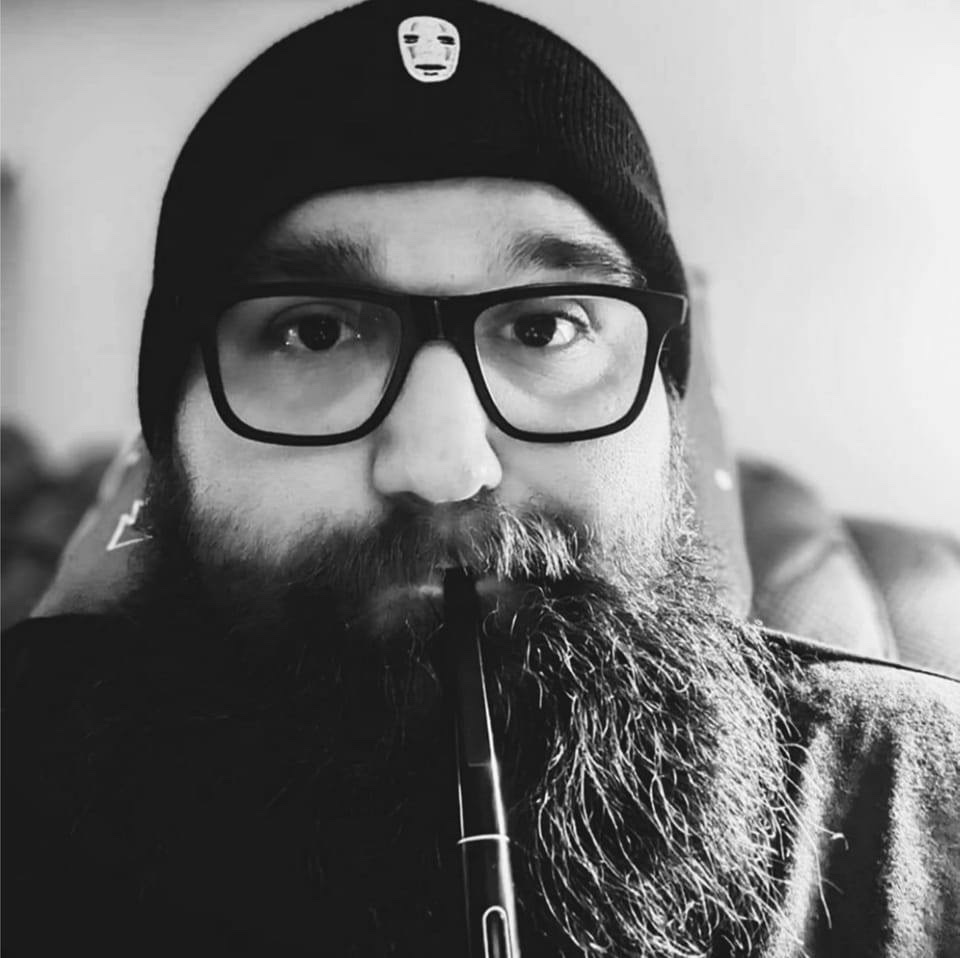
Please introduce yourself.
I’m Brian Rodman. I’m now a Pulp Factory Award winning illustrator and nominated author. I live in Louisville, Kentucky with my wife/business partner, Robyn, and our three cats. Currently I’m working on The Cosmic Wheel series of illustrated novels, but I exclusively created comics professionally from 2015 to 2023.
What genres do you write and why?
I really want my readers to feel something and relate to what they’re reading. So, I like to take Alan Moore’s approach to writing in genre. He encourages writers to blend genres as much as possible because that’s how life works. I think that’s really helpful for a writer to try to accomplish because even when you’re working within a very specific genre like New Pulp, you can better engage with your reader and give them a better story by bringing in other sub-genres into your story. Life isn’t just an adventure or a romance or a comedy alone. A horror-romance-fantasy adventure is always more interesting than simply one of those on their own–at least if you do it right. And I think most stories are like that anyway, even when it’s unintentional. Even when a reader is wanting pure escapism, they’re wanting a relatable story and I think this method brings them just that. So I do my best to play in all genres with each story, allowing the story and characters to help dictate which genres should rise above the rest.
Please talk about your illustrations and your process.
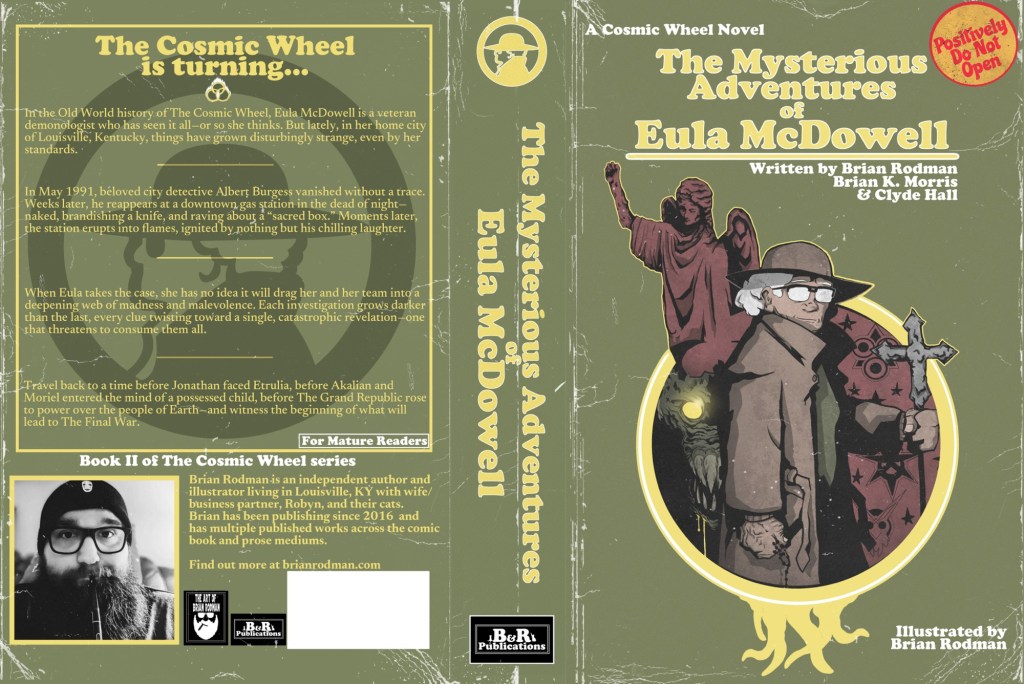
I love drawing, first off. It’s a kind of therapy for me. I’m an extremely visual person, so art is always a form of expression that I relate to the most, I think. I love the written word too, don’t get me wrong. But when I look for inspiration, I’m always going after art pieces. My process, like everything, starts in the mind. I picture what I want the illustration to look like and try my best to bring that out of my head and onto the page. Sometimes I’m really successful at that. Other times, I have to pivot because my imagination is just a better artist than I am lol. But even in those times, I try to roll with what I’m giving the piece. I think one of the most important things for an artist is to embrace their unique style. If you’re constantly trying to be a Frazetta but your style looks like Warwick Johnson Cadwell then you’ll constantly be disappointed in your work. When you embrace your strengths and weaknesses, you become a better artist. So almost always my process begins by figuring out what my style can bring to a particular illustration. Then I go from there.
What is your earliest memory of reading?
I think my earliest memory is my Grandmother reading me fairy tales at her dining room table. A close second would be me discovering comic books through The Death of Superman trade when it first came out. I think I read that over and over again for about a year or so.
When did you know you wanted to write? How did it happen?
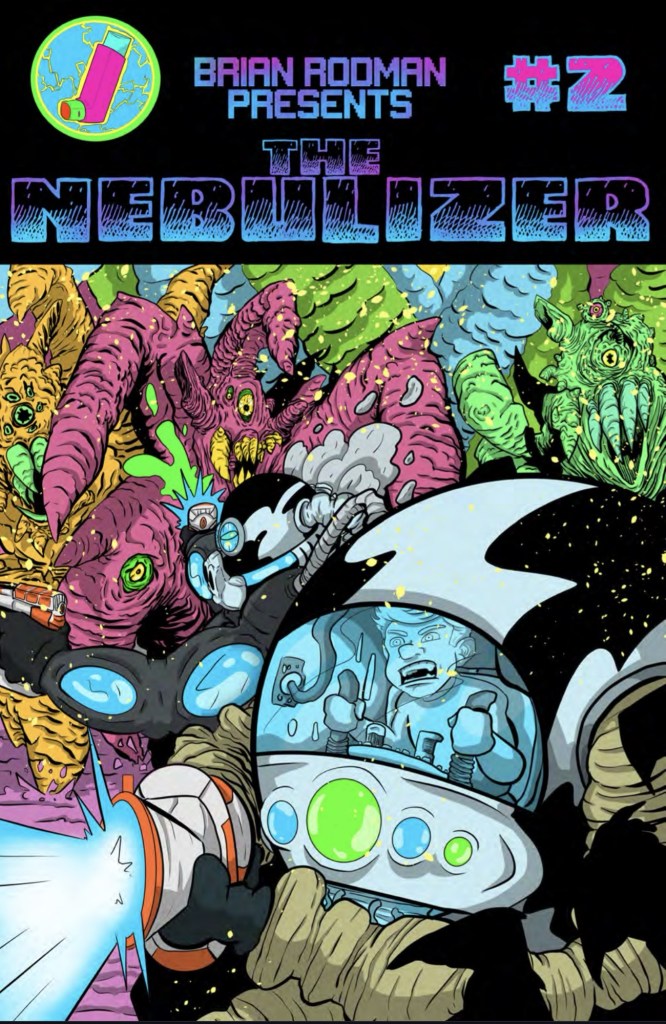
I can’t remember a time where I didn’t want to write, to be honest. Storytelling was so ingrained in me from such a young age. Some of my earliest memories are me creating comic books for my family and friends. I think it was just a part of me from the get-go. But I knew I wanted to become a professional writer when I realized I could actually do it. Back in 2015, I had been telling my wife this grand story idea for years at that point and, being someone who went to school for business and accounting, she told me that if I was going to continue to tell her about this stuff, I needed to make it happen in a tangible medium. Because I was just constantly throwing ideas at her and she couldn’t keep up with it all. Up until that point I had no idea how to even begin to enter the profession, so she stepped in and filled that gap for me, allowing me to actually bring this stuff to life. So I started my career as a bad comic book creator who gradually got better and better. Then in 2022 my health took a major hit and I was placed on long-term disability. I found I couldn’t create comics consistently anymore, but I could lay down or recline and type on my laptop on good health days and it didn’t drain me so much. So I tried my hand at writing prose and I fell in love. Authors Brian K Morris, Clyde Hall, and Charles F Millhouse were huge during this transition. Brian and Clyde encouraged me to enter the New Pulp genre and Charles gave me my first shot as a published writer in his Pulp Reality magazine.
What’s one of your favorite scenes in one of your books/scripts?
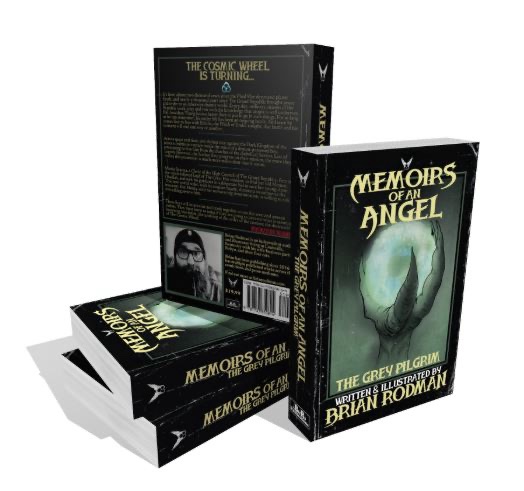
In my book, Memoirs of an Angel: The Grey Pilgrim, there’s this big battle that occurs in the middle of the book. In fact, it feels like the climax of the story, but it’s only the halfway mark. In that scene we’re bouncing back and forth between the spiritual realm where this epic battle is happening and the physical realm where these three counselors are trying to free this 13 year old boy from possession. And about halfway through the battle, one of the counselors, Mattia, finds herself alone with her possessed client who just flung her colleague out of the window with his mind. Her strength and vulnerability in the face of evil is really an inspiring thing to read. We see fear turn into fierce motherhood and the moment where that occurs is always going to be something I’m proud of.
What makes a good character? A bad one?
I think what makes a good character is one that doesn’t fall flat. Good characters are three-dimensional. Meaning they’re complicated. A good villain is one that doesn’t believe they’re a villain. There’s some depth there. They believe what they’re doing is good, or they’ve been through so much trauma that they’ve given up on “good” altogether, seeing themselves as a victim, and prefer evil just to get back at the world. And it’s the author’s job to show the reader that story and flesh out that character so the reader can relate to them. Either way, they have some depth to them and aren’t mustache twirling Dastardly Dans who are just villains because it’s their job to be the villain. A bad character is just that–a one dimensional character who just serves their purpose because the author tells them to. There’s no real reason that drives them.
What moves the story for you?
A good mix between character driven and plot driven devices. I think that’s the sweet spot for me. When characters step into the spotlight for a bit, do their thing, and then you get little breaks of narrative driven storytelling with events being in the spotlight. If you can pull that off, then that’s a good story.
What is your favorite book and why?
Dracula and A Christmas Carol are tied for my favorites. I think Dracula is one of the best villains of all time. Maybe the best. He’s just so ominous and interesting. And the story of Scrooge is a wonderful tale of redemption that’s so important for any time in history. Plus the Victorian Age just sets the mood for good horror and ghost stories. Both of these books are timeless and have a message of good vs evil from within and without. Sometimes you need to band together and fight the monster and other times you need some spirits to help you fight the monster inside you.
What do you want to say to your audience?
That you’re not alone. What you’re experiencing in life, no matter what it is (good, bad, ugly) you are not the only one going through it and that other people are experiencing life alongside you. To be empathetic to what others are experiencing will make you a better person and it will help us all get through this thing together. I think, at the root of it all, that’s what everyone can get out of my books. Or at least I hope they do. Others are here with you and so is God. And that may not look like you think it does. There’s more to life than what meets the eye. Faith is real and has the power to change the world.
What advice do you have for new writers / illustrators?
Write. Draw. Put it out there. Do it now. It’s probably going to be bad at first. That’s okay. Keep doing it. Post it on the internet. Find a group of experienced writers and illustrators who will help you and kindly critique your work and not bully you for their own enjoyment. In today’s world, don’t wait for a publisher to tell you it’s okay to publish. We can all publish online or print through Amazon, Draft 2 Digital, Ingram Sparks, or Comics Wellspring. There’s really no excuse these days to not do the work. Also, get a domain that’s yours and create an email list. That’s so crucial right now. For readers to be able to find you and engage with you in a space that isn’t social media is good to have. Dirk Manning’s “Write or Wrong” is a great resource for this stuff.
Do you have anything else you would like to add?
I love writing and illustrating. I hope I’m able to do it for decades to come and work with some other really great folks. In my opinion there really has never been a better time for indie creators to bring their works to life. Let’s take advantage of it!
Website: brianrodman.com


Leave a comment