By Adam Messer
“I dream for the days of Vonnegut and Bradbury, where writers could write what they wanted instead getting pigeon-holed into epics and series and marketing-based genres that were layered in six feet of bricks.” – Sean Taylor.
Please introduce yourself.
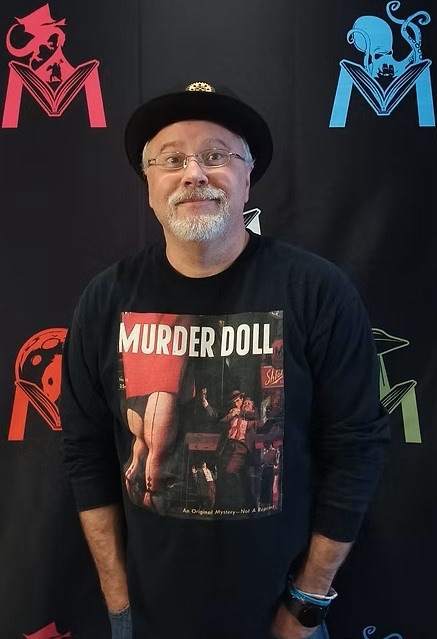
I’m Sean Taylor, and according to one bookstore, I’m a “genre-defying literary chameleon.” That just means I write stuff. All kinds of stuff. Lit stuff. Pulp stuff. Horror stuff. Sci-fi stuff. Poetry stuff. Non-fiction stuff. Comic book stuff. I dig it all.
I dream for the days of Vonnegut and Bradbury, where writers could write what they wanted instead getting pigeon-holed into epics and series and marketing-based genres that were layered in six feet of bricks. (For the love of God, Montressor!) I like to leapfrog around it all like a toad hopped up on speed.
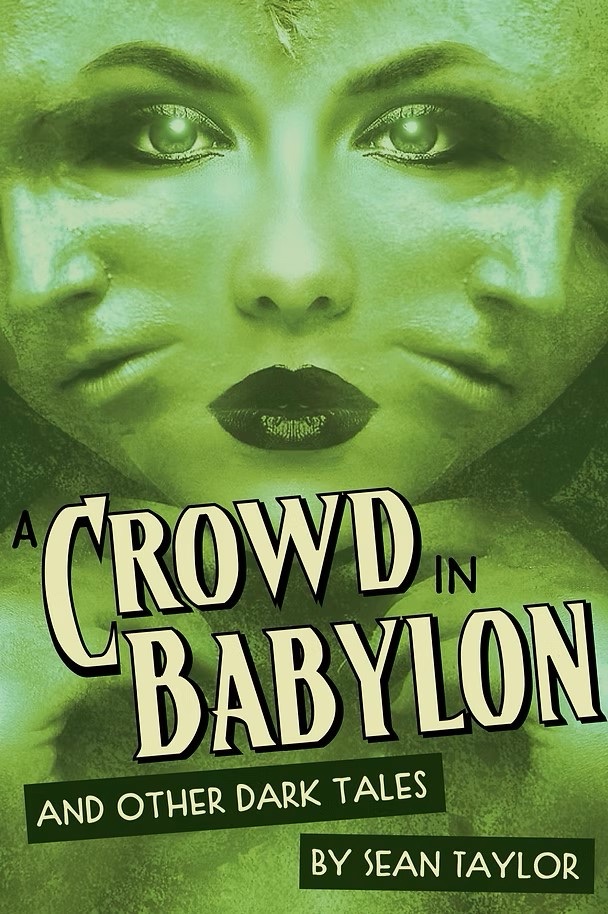
In my writing life, I have directed the “lives” of zombies, superheroes, goddesses, dominatrices, Bad Girls, pulp heroes, and yes, even frogs, for such diverse bosses as IDW Publishing, Gene Simmons, and The Oxygen Network.
I have served in journalism, corporate, and sales communications since 1997 and have experience in written communication in print, digitally, and for corporate blogs, and as a traveling speaker/trainer. During that time, I served on the staff of an award-winning flagship magazine and helped launch two publishing companies in my “spare time.” I currently teach American Literature and Reading for Special Education.
What genres do you write and why?
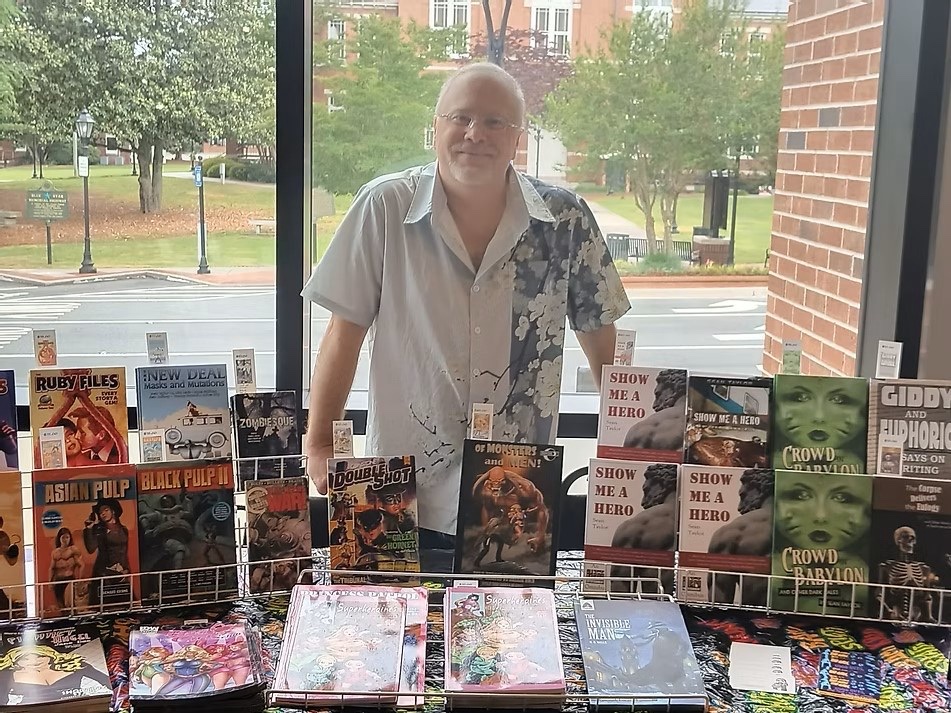
I like to write all of them, although I haven’t written straight up Western or Romance yet. I cut my teeth on literary stories, then moved to superhero fiction, then to pulp stories. Throughout it all, I’ve also written sci-fi and horror. About a year ago I finished my first novel, a mystery novel feature Jordan Baker from The Great Gatsby having to solve a murder while on a golf tour. Most of my work has been short stories and novellas up to this point.
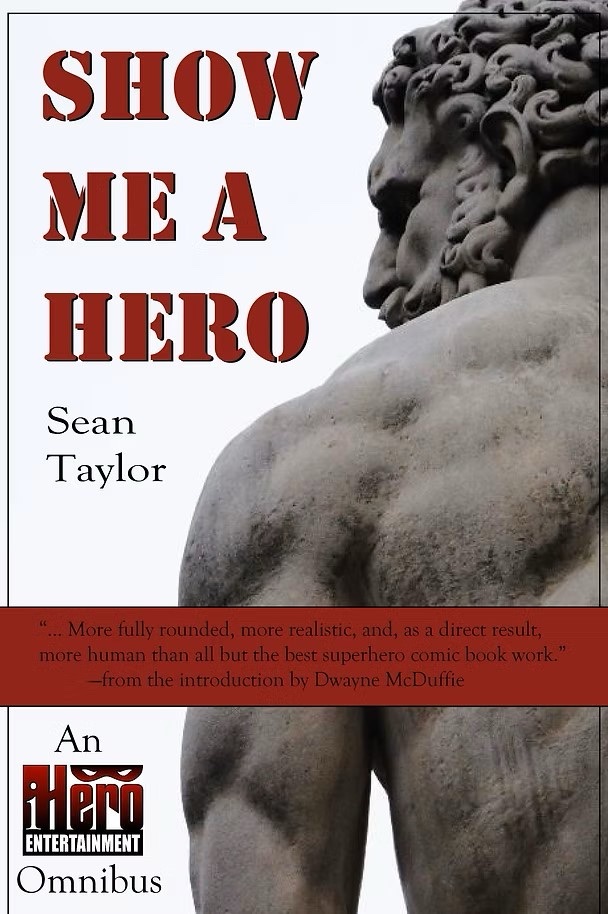
I also write non-fiction, such as my two books of essays about reading and writing, Giddy and Euphoric (now being reprinted) and My Barbaric Yawp (coming soon).
On top of that, I have also published two books of poetry inspired by my influences like Langston Hughes, e.e. cummings, and Bob Dylan.
Why do I write them all? Because I have to. I’m never satisfied staying stuck in one genre.
What is your earliest memory of reading?
Around five years old, I used to sit on my MeMe’s hardwood floor reading little tiny paperbacks about snakes, sharks, dinosaurs, and spiders. After that, I started the Illustrated Classics that were abridged with art on every other page. My favorites were H.G. Wells and Jules Verne. From there, I became a child of the Book Fair, and my collection took off like wildfire.
When did you know you wanted to write? How did it happen?
I think it was in the third grade when I wrote my first story, some fairy tale about a knight and a dragon. But prior to that, I was already a storyteller by using my toys incorrectly. I would re-costume my Star Wars figures to turn them into wizards and such, and have them battle giants (The Six Million Dollar Man and G.I. Joe) and Fisher-Price dragons in the playsets of castles and parking decks.
I was in college when I started to take writing seriously. I tried a few stories and realized how bad they were, so I started to learn and learn and learn how to be better. Eventually, I entered a contest judged by Judith Ortiz Cofer and won first prize. After that, the bug was firmly embedded in my skin.
What’s one of your favorite scenes in one of your books?
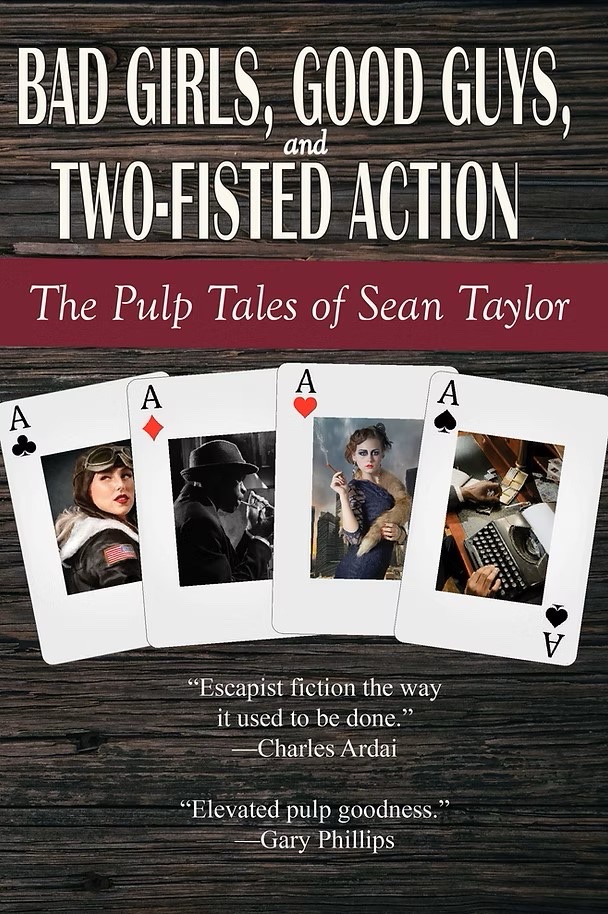
Honestly, I think my favorite scene I’ve written (particularly in a pulp story) is in the hardboiled Rick Ruby story “A Tree Falls in a Forest.” It’s a downbeat, casual, after the deed kind of scene where Rick and the woman he really, truly loves, Evelyn, and lying together in post-coital bliss, and they have a conversation about how even though they both know that in 1930s America they can’t have a “to have and to hold, till death do us part relationship” since he’s white and she’s black, the two of them are perfect for each other in that they’re both broken and they both match at the cracks, making their acknowledgement of the truth that much more tragic. I love that scene head and shoulders above even all the action-packed punch-’em and shoot-’em-up scenes I’ve written.
What makes a good character? A bad one?
Characters need to be the best representation of true, flesh-and-blood people, but not quite true ones. It’s like the argument for dialogue that says it should ape but not truly copy real speech. Characterization should ape but not truly copy real people.
There are so many things that go into that, from externals like the way they dress or their vocabulary or the kind of car they drive or house they live in, to the internals, such as their dreams, their habits, their fears, that sort of thing. The trick is to know them and push them around the board in ways that fit the way you have created them to be.
What moves the story for you?
Character moves the story. Now, that can be done via action and via dialog. But stories begin and end with character. If the folks I’m following don’t hold my attention, I don’t rightly care what they are doing in the plot.
What is your favorite book and why?
You’re just being mean now. Surely you realize just how impossible this is. So I’ll treat it the same way my daughter treated her best friend. She had one from school, one from the neighborhood, one from church, one from… So, if it worked for her, I’ll make it work for me.
My favorite book of short stories is The Ways of White Folks by Langston Hughes. My favorite novel is A Farewell to Arms by Ernest Hemingway. For hardboiled, it’s The Little Sister by Raymond Chandler. Even then, it’s hard not to include A Princess of Mars, She, I Will Fear No Evil, Wise Blood, Devil in the Blue Dress, and Their Eyes Were Watching God in that list somewhere.
What do you want to say to your audience?
The main thing I hope my readers get from my work is that I’m always a work in progress, just like they are. We are always changing based on what we read and who we meet. If I’m not someone new in each book I write, then I’m failing to live as authentically as I need to be.
Aside from that, it’s the need to embrace others, particularly those who aren’t like you. Enjoy the diversity of the world.
What advice do you have for new writers?
Keep at it. All of it. Read, and read a lot. Take what you read into your writing, but not just one author. That’s copycatting. Take from all of them. That’s learning and adapting. Write as often as you can make time. But don’t beat yourself up if you miss a day or even thirty.
Do you have anything else you would like to add?
I love to do cons, so if you’d like to see me at one near you, email me (website link below) and let me know. I can’t think of anything more fun than writing and talking about writing, particularly with groups of other writers and readers. It’s the best kind of camaraderie.
Website:
thetaylorverse.com (website)
badgirlsgoodguys.com (writing blog)
book-talk.us (video tutorials)
 Action Pulp!
Leave a comment