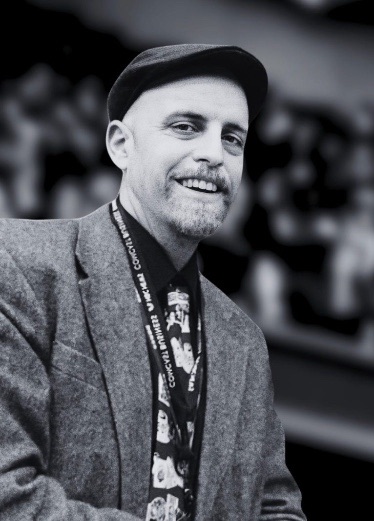
By Adam Messer
“John F. Kennedy said something like “One person can make a difference, and everyone must try.” But it doesn’t mean there’s only one good person out there. A lot of “one persons” can work together to overcome a lot of challenges and problems today.” – John A. Tures.
Please introduce yourself.
My name is John A. Tures, a professor of political science at LaGrange College, where I have taught since 2001. I’m married to a middle school Language Arts teacher (Beth) and have two kids. One’s a librarian in the Atlanta suburbs and the other is studying business at Mercer University. You’ll pick up on this when you read my debut novel “Branded.”
I started writing sports for the El Paso Herald-Post when I was in high school and added writing about politics for the campus newspaper when I was an undergraduate at Trinity University in San Antonio, Texas, as well as in graduate school at Marquette University. I double-majored in communications and political science, then moved on to international affairs in graduate school. I published academic articles when working on my doctorate at FSU. And then in the defense contract industry, you are always writing, and sometimes you couldn’t share what you wrote with others outside of a few in Washington D.C.
A local editor asked me to write about the 2004 elections, which got me writing a weekly political column that year, and over time I got to expand that work to a number of newspapers and magazines. The best stories are when you get to cover the events in person. I got to cover the Democratic debate in Atlanta in 2019 and the Republican debate in Tuscaloosa in 2024. Getting to interview candidates, party officials, media personalities and even a few celebrities as a professor seemed more like a setting for an amazing fictional novel than anything.
What genres do you write and why?
I loved reading thrillers in college, so I gravitated toward that genre when I started writing my first novel, then two more in the series. When one of our cats knocked my laptop off the chair, I wrote short stories while it was being fixed (the laptop, not the cat), and was hooked on those too. It’s allowed me to try out everything from mystery and horror, to urban fantasy and inspirational, without having to give up my book genre.
What is your earliest memory of reading?
Believe it or not, I never read fiction outside of class until high school. There was so much fascinating history that I wondered why anyone would read something made up, when there were great stories from reality. My younger brother, a prolific reader, finally convinced me to read Stephen King and Thomas Harris, and I could not only be excited by these tales, but see their value for the reader and society. They could speculate on what could happen that history rarely provided, as well as have characters wrestle with tough choices, something few history books offered.
Later in college, I started on the thriller genre. In the late 1980s, Tom Clancy was the king. But two writers, John Grisham and David Morrell, surpassed those novels with even more compelling plots and characters. During the pandemic, I got to ask Grisham a question at a national interview. And by chance, I began chatting with Morrell over movie soundtracks online, and we’ve been exchanging messages ever since. He’s been very encouraging, and I will always appreciate it. His short story collection “Before I Wake,” helped inspire me to write short stories.
When did you know you wanted to write? How did it happen?
As the pandemic struck, everything I knew seemed to be closing and hunkering down, from school to sports to entertainment. I was interviewed about an award my wife was about to secretly receive at her school, and the questioner asked what we were doing differently during COVID-19. I noted that she was making masks for everyone she knew with her sewing machine and fabric. My older kid learned to play the guitar. My younger one took up online chess. “And what are you doing differently?” I had nothing new going at the time. Aha! That was the “inciting incident” that got me thinking about writing a fictional novel for the first time.
I presumed that I would write the story, print it out at Staples, stick it in a binder or two, and dust it off every few years, or show to grandkids to say what I did during COVID-19.I never expected to fall in love with the story, or the process of fiction-writing. At an Atlanta Writer’s Club meeting, a guy with Hollywood connections loved my pitch, and asked me to send him the full manuscript. It had to be the best Christmas ever. Ultimately, he politely turned it down, but it got me thinking I just might be able to get “Branded” published.
What’s one of your favorite scenes in one of your books?
“Branded” is about a professor and his students who uncover a product placement scheme where a corrupt company in bed with a network manufactures tragedies to hype certain goods and help their clients’ market share, at the expense of innocent lives. When the powerful company members get wind of the researchers’ findings, they come after the teacher and his students. The academics have lost nearly everything, yet as a team, with families, summon the will to see the whole thing through, sparking a nationwide cat-and-mouse hunt and quest to get the truth out in public, no matter the cost.
That scene gets a lump in my throat because I’ve seen my students at LaGrange College have those moments, where they have to overcome imposter syndrome, self-doubt, fears, and a variety of roadblocks to do everything from presenting their work to competing in contests (just like the students in the book), then go on to real life challenges you wouldn’t believe would be possible for graduates from a small liberal arts college in rural Georgia. And being able to play a small part in helping them go beyond anything I’ve ever done means so much to me. It’s why I got into the teaching and mentoring profession.
What makes a good character? A bad one?
In the thriller genre, you come across a lot of cases of nearly flawless characters who have perfect knowledge, perfect fighting skills, and perfect physique and looks and is single, making them irresistible to the opposite sex. They are wealthy or have super wealthy friends or work for a super wealthy corporation or government agency with unlimited budgets. Even well-connected enemies seem powerless to stop them. “That’s what readers want,” a librarian once told me, when I mentioned my dismay at some stories and plots in the genre.
I wanted a protagonist a little more relatable to the average person, one who is happily married and has kids, and a mortgage, who not only has a tight budget but faces job pressures. And the family wouldn’t be just sitting at home, but would be key participants in the story, like a number of families I know. I wanted the protagonist to have a few realistic flaws and blind spots. The same could be said for his students. A publisher was interested in “Branded,” but told me to lose the family and the students…just make the professor the smart guy who solves everything himself. Even though I had no other offers, I had to turn him down. In academia, you’ve got teams that take on challenges and solve problems. I would have had to turn “Branded” into every other genre I don’t like. Most of the protagonists and allies are amalgamations of real people I know.
As for “bad characters,” antagonists, I suspect a few writers also base them on people they know. I never wanted to do this, so I base the villains on some favorite Hollywood move characters. I liked how in the movie “Die Hard” (the first movie I saw in college), the Hans Gruber character was so slick that you almost wanted him to win. So I based the leader of the product placement firm on Gene Hackman. Even when he’s the protagonist, he seems like he’s kind of a villain, and that sly grin seals it for me.
Only one villain is based on a real person. It’s the professor working for the product placement company, based on William Atherton’s “Professor Hathaway” from the movie “Real Genius.” He’s also based on me, when I get too smug or arrogant, and how I would be if I only cared about self-promotion rather than the students. It reminds me to focus on what really matters.
What moves the story for you?
That’s another good question. In college, I hung out with a number of readers, and we would sometimes have late night debates about whether character or plot matters more. I think you need the characters to grow as a result of the plot, and how they react to pressures. I guess that’s why we say phrases like something “building character” for us. In the best stories, you’ll see that at the end of the tale, it’s a different person. I’ll have students win an award, or overcome an obstacle, or find some success after graduation, and they will say “I never thought I could do it.” I usually respond “But you believed in yourself enough to try, and that made the difference.”
I have sequels to “Branded” (one’s coming out in August, titled “Independent Thought.” And I hope these two books do well enough to have the third book come out in 2027). In these, the students go on after graduation to some bigger and tougher challenges. But the first adventure gave them the tools to succeed. It’s the same for the husband-and-wife professors and their kids.
What is your favorite book and why?
That’s a tough one. There are so many to choose from! I would have to say “A Gentleman in Moscow,” by Amor Towles, more for the context of reading it, though I like the setting (I got to go to Moscow in graduate school), historical time, characters, eclectic pace, and stunning conclusion. Not only is it one of my favorites, but it’s something that my sister and I “read together” long distance. We hadn’t caught up in awhile, being geographically apart from each other, and used to read different genres. It was a great way to provide a reading connection, and we suggest books to each other, around the time my local book club fragmented due to cross-country moves by key members. Now my sister edits my novels and short stories, and does an excellent job of it. My mother also does the same, and we swap book reading ideas; she and my dad are part of a book club. Towles was one we shared as a family reading favorite, I suppose.
What do you want to say to your audience?
Whether I am writing my political columns, a novel, or short stories, I want to borrow from George Orwell, when he said what motivates him to write is to expose some sort of injustice. I would add that in addition to reporting on problems, I would also like to shed some light on some things going well, someone overcoming a challenge, doing the right thing against pressure, bipartisan cooperation. I try to write on either an uncovered topic, or cover a subject in a different way from what everyone else is doing.
In my novels, columns, and short stories, I also want to make sure that the audience is thinking for themselves. That’s what “Branded” and the sequels are about. I wrote about product placement schemes because I believe we’re being fed a lot from some corporations and media outlets (24-hour news networks, social media) and without thinking about what’s really going on, we could get easily brainwashed. In my second novel “Independent Thought,” I take the question I get them most from people, why third parties and independent candidates are so rare in American politics, and what hurdles they face. And in “Moral Hazard,” the third story in the trilogy, I focus on an international crisis, and hidden agendas that those in government and other countries have.
In these stories, I also have no shortage of good characters, good companies, good people in the media, and good folks in academia, imperfect but ready to step in and do what’s right. John F. Kennedy said something like “One person can make a difference, and everyone must try.” But it doesn’t mean there’s only one good person out there. A lot of “one persons” can work together to overcome a lot of challenges and problems today.
What advice do you have for new writers?
My first piece of advice is to start planning before you write. There’s a lot of debate about “plotters vs. pantsers.” I’m clearly a plotter. I started after an online graduation in May of 2020. I plotted the characters, the setting, the story, chapter summaries, everything. When our college reopened in September, sort of, I had to be quarantined because of a student (though I thankfully didn’t catch the coronavirus). I used those ten days to write the first ten chapters of “Branded.” It helped keep me invested in the story.
My second piece of advice is to be a plotter, not a plodder. Get words on paper. I know writers who seem to prepare and reprepare forever, never getting anything written. At some point, stop redoing everything or adding minute details, and start writing.
My third piece of advice is to not chase the shiny objects in other plots and new ideas, and see your original work get done. I know some fellow writers who after their second, third or fourth chapter come out with a new story, and never seem to finish even one. Tuck those great ideas away for your next novel after the current job is finished, or make them into a short story.
My fourth piece of advice is to seek out those who can provide good constructive criticism. After I wrote my first ten chapters, I gave them to Michael Bishop, a well-respected science fiction writer who is a fellow faculty member. They were full of red ink and critiques. Of course, I got mad…how could my friend do this to me? Then after getting over myself the next day, I saw that he was giving some really helpful advice that was invaluable. If I hadn’t done that, I would have had a finished, heavily flawed novel.
Fellow author Sharon Marchisello, a more experienced writer who is featured on this site, provided additional advice as she read my other chapters. And I read her works too, offering similar advice. You should be willing to put in the same amount of work for others as you hope to get. I’m part of a critique group, doing the same for other writers. And my family was great at listening to me read my stories on long cross-country car trips, with the provision that they would be allowed to tease me and my story, just to keep things light. We still have inside jokes from my novels, and short stories.
My fifth piece of advice is to believe in yourself and what you wrote. I think it was Alyssa Matesic who said that at least one person is affected by you writing a novel…you! And yes, you’ll get lots of rejections. Don’t take it personally…it’s a business if you want to pursue that angle. I think I have 350 short story rejections compared to 70+ short story acceptances. But I’ve written about 110 short stories, so be persistent. Your work will find a home somewhere. I have so many agents and publishers who either rejected “Branded” in form letters, or didn’t say anything at all. I tell discouraged writers that you only need to be lucky once. The publishing industry has to be lucky many times to stop you. And with self-publishing options and hybrid publishers, you’ll have perhaps the best chance in history to get your words out there.
I can still remember where I was when I got my first publishing offer for Branded. It was over the summer, and I was checking my email before a new student orientation. People said it looked like I was dancing on a cushion of air the whole day. And when the box was opened and I could hold my hardback cover of Branded in my hands, standing next to my wife, the publisher and his family, and the bookstore owner, I was positively speechless. It takes a lot to do that to this talkative professor!
I can’t say enough about how helpful Huntsville Independent Press has been with the publishing process. They let me keep my story in the story, and I didn’t have to write anyone or anything out. While the cover changed (and it has received rave reviews), they let a LaGrange College student who designed the original cover (her artwork was great, but we couldn’t change details to fit the vision) have the artwork displayed, and a link to her art page. Joshua and Trinity have also been great to introduce to my family. And I loved their copy editor’s work and comments.
Do you have anything else you would like to add?
Hank Brown, one of the Freedom Riders at the bus bombing in Anniston, Alabama, told my college “At the end of WWII, the headlines said the Allies won the war. And we need allies more than ever.” That’s true of writing. Just as in my stories, in real life, you need allies, whether it’s for a research project, family plans for an event, national problem, or getting a novel or short story done, “look to the helpers,” as Mr. Rogers once suggested. And be ready to be a helper yourself. In my author talk, I hope I spur others on to writing, through encouragement and advice, and getting the word out there.
Website:
https://www.huntsvilleindependent.com/product-page/branded
https://www.lagrange.edu/academics/undergraduate/majors/political-science/index.html
 Action Pulp!
Leave a comment