January 28, 2026
By Adam Messer
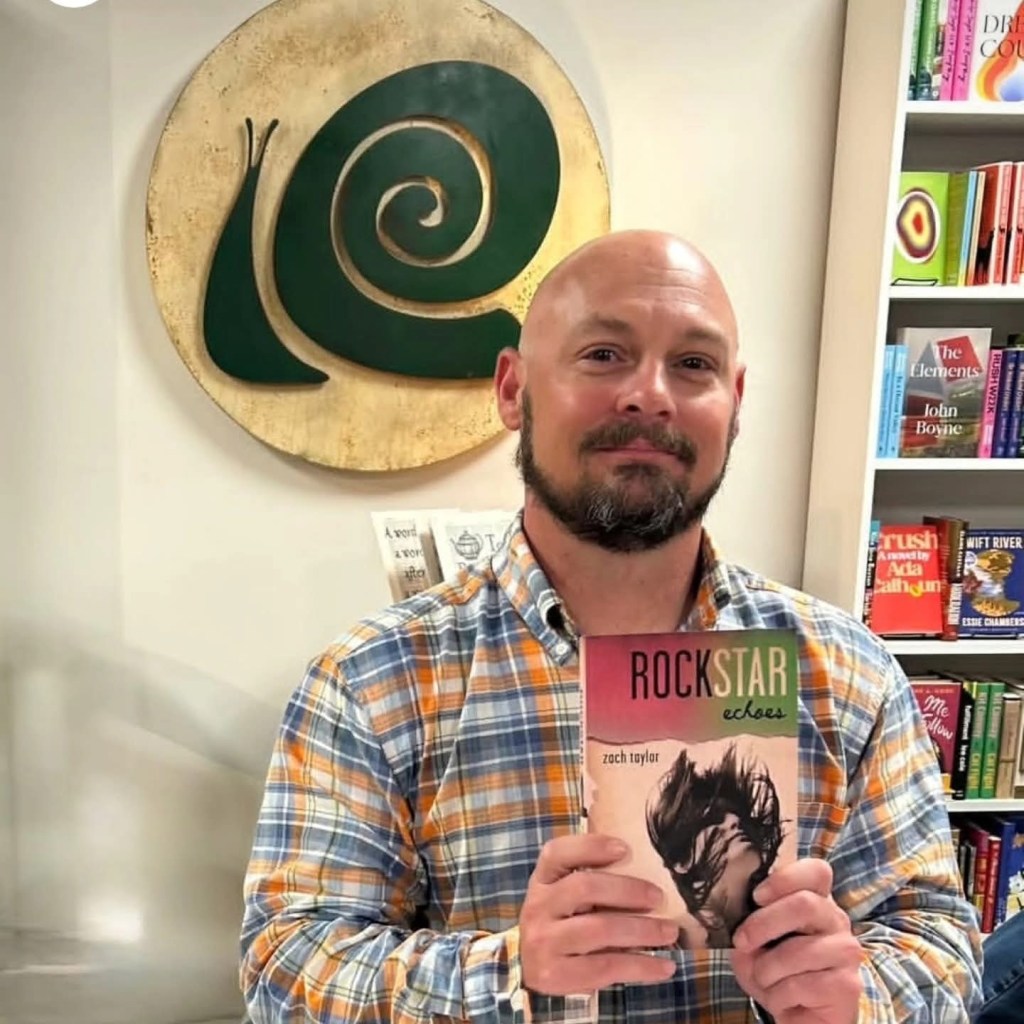
Zach Taylor loves his family, reading and writing. He is a NASA Engineer, quite literally, and an author who writes about the seedy side of grunge rock band life.
Please introduce yourself.
My name is Zach Taylor. I’ve been married to my high school sweetheart, Alyse, for nearly twenty-one years. We have three children: Aubree, Griffin, and Gavin. We have three pets: Nova, Cash, and Spare Kitty.
Professionally, I’m a NASA engineer at Marshall Space Flight Center, where I manage a large fabrication facility. Over the course of my career, I’ve received several of the agency’s highest honors, including the Silver Snoopy Award, for work spanning the Space Shuttle program through the Artemis missions.
What genres do you write, and why?
For most of my life, I assumed my first books would be science fiction; space epics, dystopian stories, or post-apocalyptic worlds. I’ve been writing in those spaces off and on for more than a decade.
The Rockstar series, however, became my true entry point into publishing. The idea originated from a series of vivid, closely spaced dreams. What initially looked like a familiar “band book” quickly revealed something deeper during the research phase, particularly when examining how modern culture, identity, and power dynamics play out across social platforms.
Music plays a central role in this work. Grunge, especially, is deeply personal to me. I’ve long been fascinated by what artists like Chris Cornell, Kurt Cobain, Scott Weiland, and Layne Staley endured while creating such raw, confrontational music. I wanted to write a story that looks directly into those darker corners and doesn’t flinch.
That was a difficult process. Writing this honestly meant facing unsettling truths about myself and about our society. It also meant accepting that people who know me would see things they had never seen before. Once I stopped writing “safe” and committed to that level of honesty, the story became inevitable. In the process, I learned a great deal about myself and, more importantly, about the women in my life and the professional struggles they’ve faced. Those were necessary and meaningful changes.
What is your earliest memory of reading?
Two stand out.
The first “real” book I ever chose for myself was The Last Command by Timothy Zahn, the third book in his Star Warstrilogy. Ironically, I read the series backward.
The second was Clan of the Cave Bear by Jean M. Auel, which I read during a long road trip to Wyoming around 1995. It was my first adult novel, and even now I’m surprised my mother let me read it at that age. In hindsight, I think she wanted me to confront difficult truths early—to think independently and grapple with human nature. Those same themes run throughout the Rockstar universe.
When did you know you wanted to write?
I’ve always enjoyed writing. In grade school, when assignments called for a short story, I was the kid who turned in a dozen pages instead of the minimum.
The first book I ever completed and had printed was written in seventh grade. It was a post-apocalyptic story in which all adults had been exterminated and teenagers formed a military to fight back against machines. Think The Terminator meets Lord of the Flies.
Around the same time, I drew an entire comic inspired by Army of Darkness, printed copies, and sold them to classmates. Writing and drawing allowed me to escape into dangerous, imaginative worlds long before I could experience anything like that in real life.
What’s one of your favorite scenes in your books?
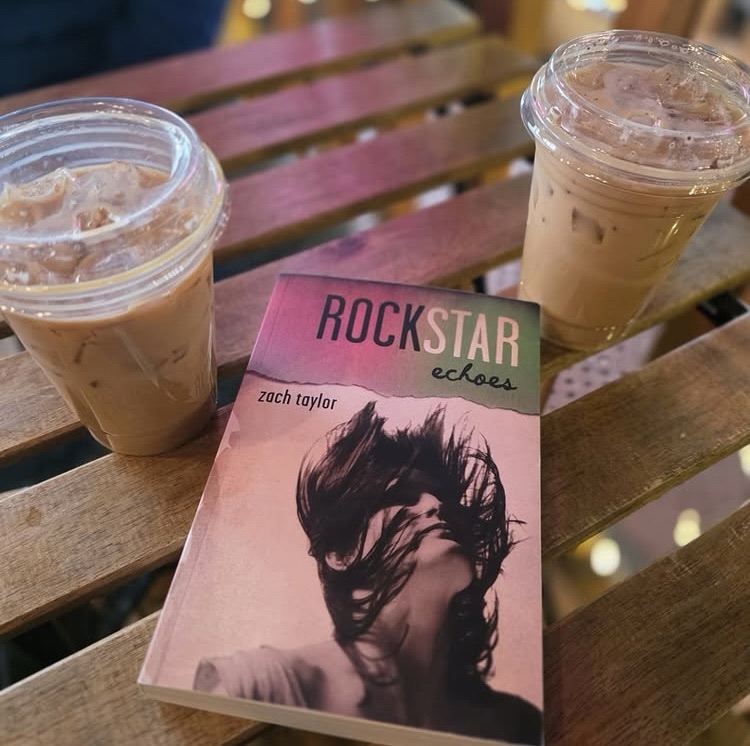
I’ll limit this to Rockstar: Echoes, since it’s published.
My favorite scene takes place when Aberdeen is driven offstage because Kline Thomas is nothing like Lloyd Brannon, the legendary frontman he’s replacing. The crowd turns hostile. Beer bottles and insults fly and the band retreats backstage, shaken and sure that Kline is the wrong guy.
Kline has sacrificed everything to be there. He owns only one song. Compelled to play it, he drags Eddie, his best friend and guitarist, back onstage. He shoves an acoustic guitar into Eddie’s hands, pulls a chair across the stage of the Whiskey A Go Go, and tells the crowd, “If you want to douse me in beer, let me do it for you.”
He dumps two bottles over his head, smashes them, and starts playing.
The room changes. The band is shamed into returning. What follows marks a cultural shift, not just for Aberdeen, but for the audience watching it happen.
What makes a good character? A bad one?
I believe strong characters live in moral gray areas, because that’s where most people exist. None of my characters are purely good or purely evil. They’re human.
A good protagonist should frustrate the reader at times. A good antagonist should be understandable, even when they’re frightening.
I also believe effective writers use familiar archetypes intentionally, then quietly subvert them. Readers may think they know who a character is but what defines that character often turns out to be something else entirely.
What moves the story for you as a reader?
The stories that stay with me reveal an underlying ideology without announcing it. The author allows you to sense that something is wrong long before explaining why.
That’s what I aimed for in the Rockstar universe. The surface plot may feel familiar, but beneath it are ideas that slowly unsettle the reader. You’re not told what to think. You’re allowed to discover it on your own. When that happens, it creates change—and even the smallest change still matters.
What is your favorite book, and why?
My favorite book is The Road by Cormac McCarthy. It’s bleak, minimalist, and relentlessly unsettling. Even the ending refuses clear catharsis. You’re left questioning whether the “right” outcome actually occurred. That rejection of emotional release takes real confidence and control, and I borrowed heavily from that restraint in my own work.
That said, Station Eleven took much longer for me to fully understand. When it finally clicked, it fundamentally shaped how I wanted to write. The Road shows survival through selflessness, courage, and acceptance of inevitability. Station Eleven shows why survival alone isn’t enough. Art and music become the language for grief, memory, and hope—the things the characters themselves cannot always articulate. In a world stripped of stability, culture carries meaning forward when words fail. That idea? The necessity of art as expression, preservation, and defiance became central to how I approach storytelling.
What do you want to say to your audience?
These books are about music, not just as a backdrop, but as a lived experience. Through performances, cultural references, and original material, I want readers to hear and feel the music on the page.
This isn’t nostalgia, and it isn’t another glamorized band story. It’s about what artists endure to create the work we celebrate—and what it costs them. When readers grasp this, I hope they also recognize what consumers define as “greatness” costs the artists who create it. By “art,” I mean life itself, and how much of it is spent, traded, or lost in the pursuit of success.
What advice do you have for new writers?
Sit down and write. Do it for yourself first.
Understand that everything will take more time and effort than you expect. Break the work into manageable pieces, and don’t overwhelm yourself by looking too far ahead.
Is there anything else you’d like to add?
I’d love to hear from readers of Rockstar: Echoes, especially those who love music and have been waiting for a story where it isn’t just a plot device, but the backbone of the narrative.
Website: Instagram @zachtaylorbooks, Facebook: Zach Taylor, Author.
Subscribe to our newsletter for updates and more!
 Action Pulp!
Leave a comment