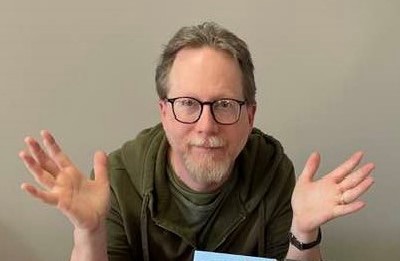
By Adam Messer
“Finish something, which means you have to stop dropping stories before finishing them. Pick one, finish it, and then go back and make it pretty.” – Jim Beard.
Jim Beard is a writer, editor and publisher of adventure books and non-fiction pop culture books.
Please introduce yourself.
I’m a writer, editor, and publisher of adventure fiction and pop culture non-fiction. I consider myself a child of the late 60s and early 70s in terms of all the pop culture from those years that shaped me and what I do today.
What genres do you write and why?
Pretty much everything and everything. My interests are all over the place, and I don’t want to tie myself down to any one genre so that my imagination is always free to roam where it will. If anything, I’ve done more pulp adventure and occult detective stories than other genres.
What is your earliest memory of reading?
All the greats: Hardy Boys, Roald Dahl, “The Spaceship Under the Apple Tree,” Winnie the Pooh, Oz…but fairly early on, I moved up to adult-level books because of my voracious appetite. I was reading Alan Dean Foster novels in grade school and I never looked back.
When did you know you wanted to write? How did it happen?
I was “writing” at an early age but didn’t really know it. I was always a storyteller, always wanting to make up stories and put together scenarios for the neighborhood kids to play, I just wasn’t actually writing them down. That came a little later when I wrote my first science fiction story for a seventh grade assignment, and then really dove into creative writing in high school. I’m actually trained as a visual artist and have a degree in graphic design, but I didn’t apply myself to it and was without focus for several years. Then, I tried my hand at pulp writing and here I am today.
What’s one of your favorite scenes in one of your books?
Great question! I wish I had a good answer! Too many! That said, any time I’ve written a scene with dialogue that really sparks between two characters is probably when I’m the happiest. Those times are magical to me and always make me feel like I’m a real writer.
What makes a good character? A bad one?
One that comes alive. The greatest thing that can happen to a writer, in my opinion, is when a character starts to speak and act on their own, apart from what you’re doing, and begin to let you know what they want to do and say. That’s a kind of magic. Those are the good ones. The bad ones might be the ones that never really let you know who they are.
What moves the story for you?
The concept of always wanting to keep your reader glues to the page, and then wanting nothing more than to turn it to find out what happens next. Pulp writing is always making sure the story never stops. It barrels along until it’s done, nothing more and nothing less. Get in, tell the story, and get out. Boom.
What is your favorite book and why?
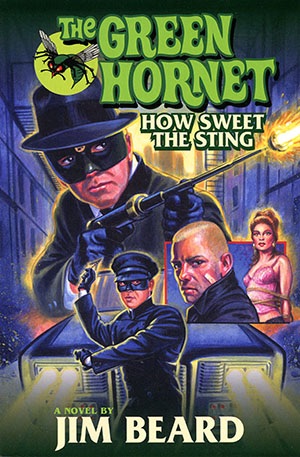
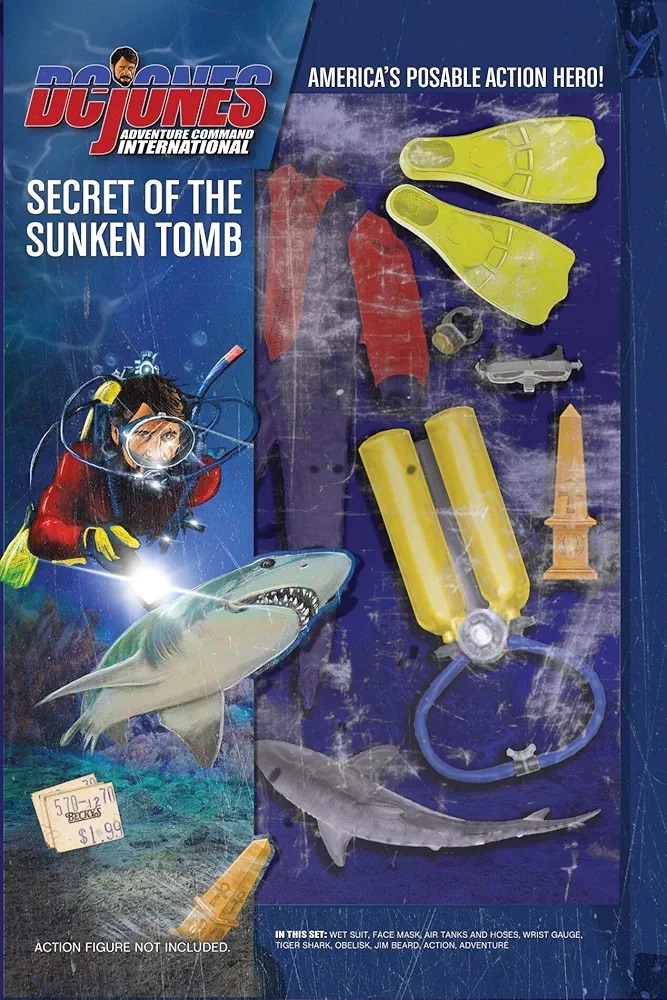
I have a couple, though of course that’s the old chestnut about “they’re all my children and I can’t pick just one.” Some of my favorites are the first D.C. Jones and Adventure Command book, and my co-authored novel AIRSHIP HUNTERS with Duane Spurlock. I’m also very partial to my official Green Hornet novella, HOW SWEET THE STING. Those were all “perfect storms” for me.
What do you want to say to your audience?
“Here’s some entertainment for a few hours. Forget the stupid world outside your window and get lost with me in an adventure for a little while.”
What advice do you have for new writers?
Two things. “Finish something,” which means you have to stop dropping stories before finishing them. Pick one, finish it, and then go back and make it pretty. Stop leaving a trail of orphans behind you. The second one is, “Don’t listen to your mother,” which means stop relying on your family and close friends to tell you how great of a writer you are. Your mother is not going to give you the tough love you need, nor is Aunt Bertha. They’re going to tell you you’re the greatest, which is not true. If you believe it, you’re going to publish something that will make you look foolish. Get someone impartial to read your stuff and listen to what they say. Your mother is not the best editor.
Do you have anything else you would like to add?
Just that self-publishing is something everyone should consider. The “traditional” publisher isn’t always the best way to go. Trying to get an agent isn’t always the best way to go. Figure out what you want to do and what kind of a writer you want to be and don’t get stars in your eyes. Work at it and stop worrying about “author photos” and what kind of wine and cheese will be served at your “book release event.” Be a writer, not an author.
Website:
 Action Pulp!
Leave a comment