
February 12, 2026
By Adam Messer
“I enjoy the play of words as they express my perceptions and feelings.”- Tulip Chowdhury.
Tulip Chowdhury is a writer and poet who conveys life and meaning through her work and her words.
Please introduce yourself.
Hi, I’m Tulip Chowdhury — a creative soul who loves expressing life’s experiences through writing and other creative pursuits. I enjoy music, hiking, swimming, cooking, movies, and meeting new people — and I’m always excited to try something new. I give my best to life in both its highs and its lows.”
What genres do you write and why?
I write fiction, non-fiction, poetry, columns, and creative non-fiction.
Writing has been my self-expression since early childhood. Each poem is like a breath of fresh air. I enjoy the play of words as they express my perceptions and feelings. Fictions come to me to hold up life in its different faces among the people I meet along the way, their struggles and their triumphs. My regular columns appear in an English daily in Bangladesh, my birth country, “The Daily Sun”. I enjoy writing about social issues, immigrants in the USA, and nature. inspirational and family.
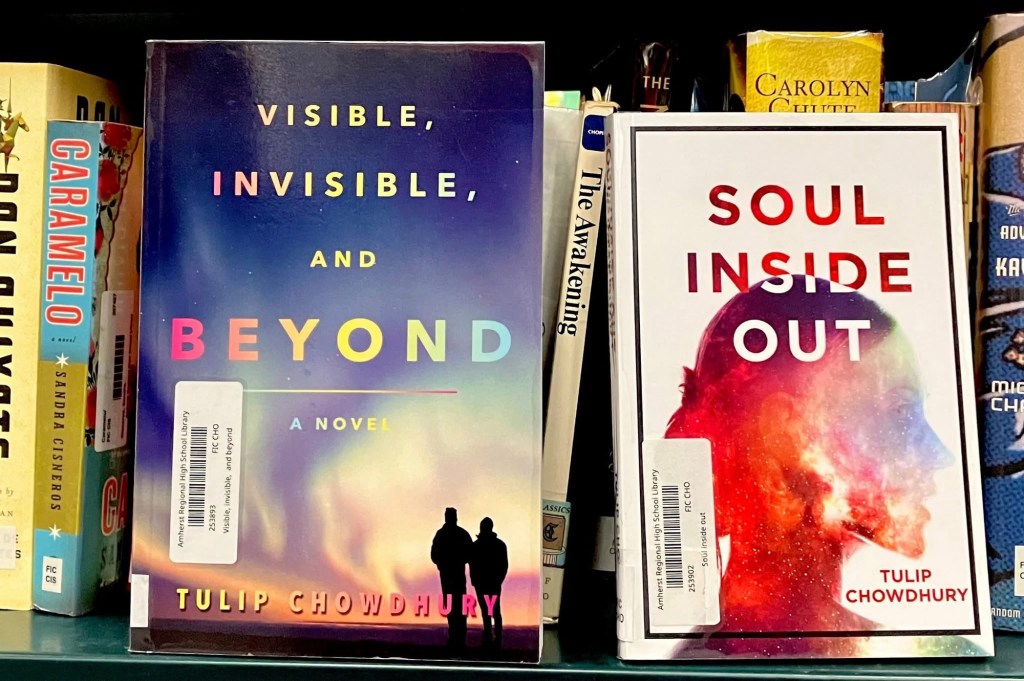
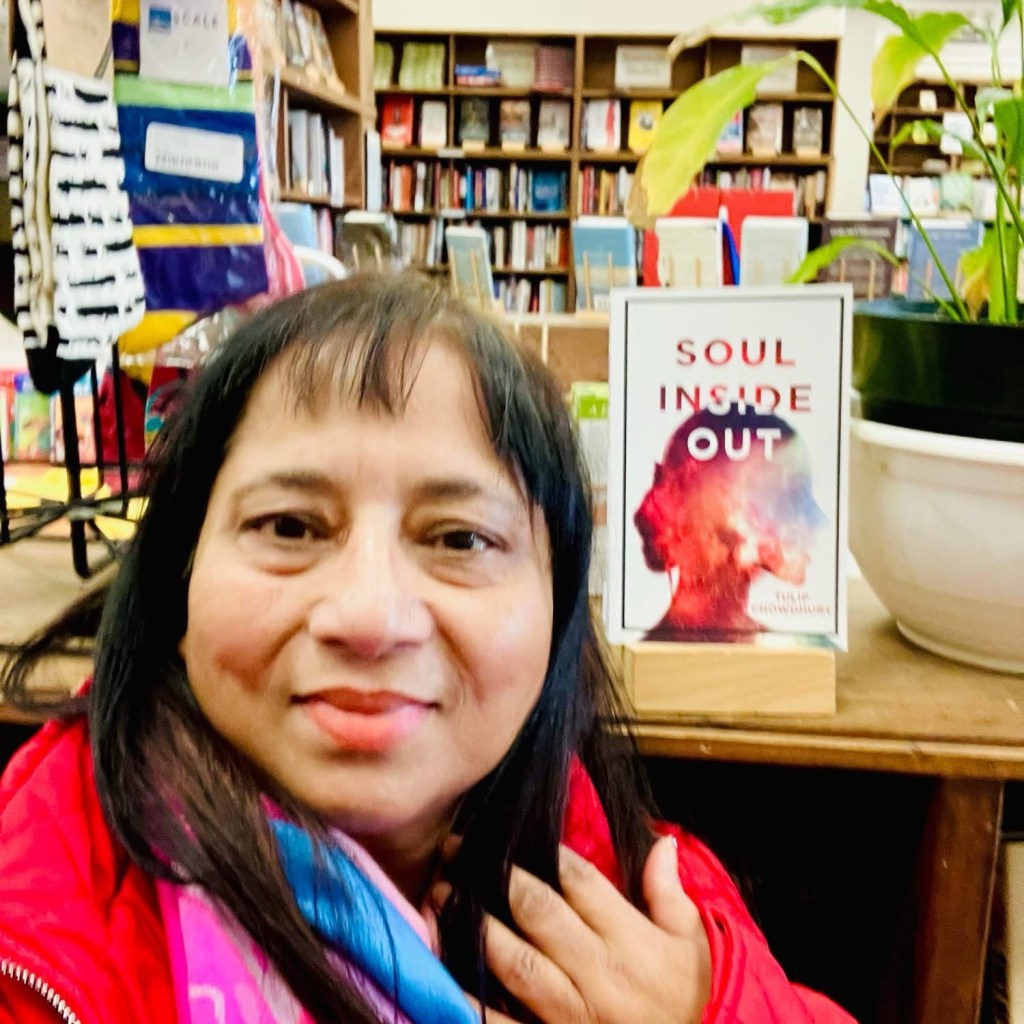
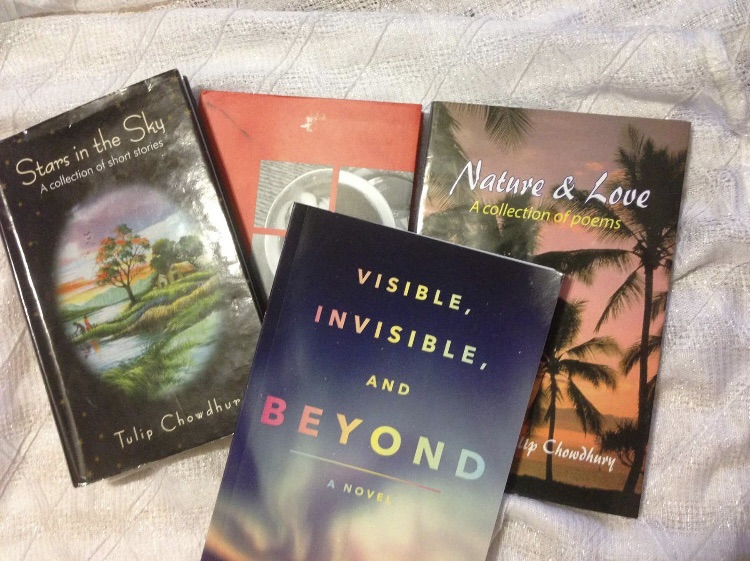
My first novel, “Visible Invisible and Beyond”, is metaphysical fiction, and I continue to explore the spiritual realms. My poetry collection, “Verses on Vines,” comes with poems inspired by Rumi. The short story collection “Life Stations” captures life scenarios from ordinary days to fiery ones. The books are available on Amazon.
I was a TV host with Amherst Media and a storyteller with Valley Voices Story Slams in Massachusetts two years ago. I am on the lookout for anything new in my new life station in Georgia.
I avoid political topics in writing because it is my peaceful sanctuary for the creative self.
What is your earliest memory of reading?
Fairy tales and folklores with characters swinging between good and evil were my earliest reading in the late 60s. They came in the form of female and male demons, monsters, and the stories carried moral lessons of good winning over evil. Fairy tales touched the margins and, at times, expanded into the celestial world, enriching the plots.
Along with the Bengali stories, I had translations of Russian fairy tales, which were revealing to me in their scenes of snow, cold, and, often, more of the human stories. I still remember some stories from my book, Rushdesher Roop kotha” meaning “Russian Fairy Tales”.
When I was around eleven years old, I went to Europe for my father’s work, learned English at the American International School of Belgrade, and fell in love with the language. Reading then started with books like “Heidi”, “Little House on the Prairie, “Hardy Boys, and Nancy Drew” series.
When did you know you wanted to write? How did it happen?
Writing began at an early age, encouraged by my paternal grandmother, who raised me from the age of 7 months. Being separated from my biological mother, I had childhood anxieties. My grandmother handed me a pen as soon as I could write and draw. I wrote short rhymes, and she posted them to my aunts and even to relatives living in England. She introduced me to nature, and I penned rhymes about flowers, butterflies, and bees, which we had in plenty in our village.
With time, I started publishing in daily newspapers in the junior pages. My first poem, published in “The Bangladesh Times,” was about the snow I had experienced in Europe. I was around fourteen then.
As an adult, I went on to freelance for various newspapers while running a large family and pursuing a teaching career. I published my first poetry book, “Raindrops,” in Bangladesh in 2002, after selling my wedding gifts of gold to pay for it. I am glad I did, for the joy of holding the book gave me wings to write on.
What’s one of your favorite scenes in one of your books?
I can’t think of any particular favorite scene from my writing—I write what comes from my heart, and each piece is a work of love. However, I like re-reading my writing on nature, getting drenched in the rain, freezing in the snow, or being in the sea while waves play with me.
I am bilingual, and so I have a favorite from Tagore whose original works are in Bengali. My favorite of his works is Geetanjali, a collection of devotional and lyrical poems.
6. What makes a good character? A bad one?
Creating characters is challenging for me because I want to preserve the basic goodness that humans are born with. When I have to show a character’s negative side, I usually resort to dialogue—bring a third-person view. My stories are usually on peaceful, love-sharing, and sometimes humorous notes.
What moves the story for you?
TC: Literature is like a spider’s web, and in the middle is our need for love and togetherness in sharing life. When stories make a difference in others’ lives, make me think beyond the words, I savor each moment of reading them.
What is your favorite book and why?
My favorite book in English is “East of Eden” by John Steinbeck. The characters in the book are magnified on human nature of good and evil, and the scenic descriptions of the Salinas Valley remain engraved on my mind forever. After reading that book, I wanted to come to America and live in a valley—a wish the universe granted. I lived in the Pioneer Valleyof Massachusetts for over a decade.
It’s funny how life brought my wishes to you when I had no idea that I would come to live in America.
What do you want to say to your audience?
A big, big, “Thank you!”
What advice do you have for new writers?
To writer friends, I can say —let us write on. And, please don’t forget to share.
Do you have anything else you would like to add?
I share my creative ventures on:
1. Medium.com. https://medium.com/@tulipchowdhury
2 . Substack: https://substack.com/@tulipc2912
3. Facebook author page: https://www.facebook.com/tulipc11/
4. Instagram: https://www.instagram.com/tulipchowdhury11/?hl=en
Subscribe to our newsletter for updates and more!
 Action Pulp!
Leave a comment