February 11, 2026
By Adam Messer
“I had no idea what I was doing, but I soon knew I loved writing and never wanted to stop making things up.” – Scott Pearson.
Scott Pearson turned his love of storytelling into a career in writing, editing and publishing, including a science fiction series called Star Trek.
Please introduce yourself.
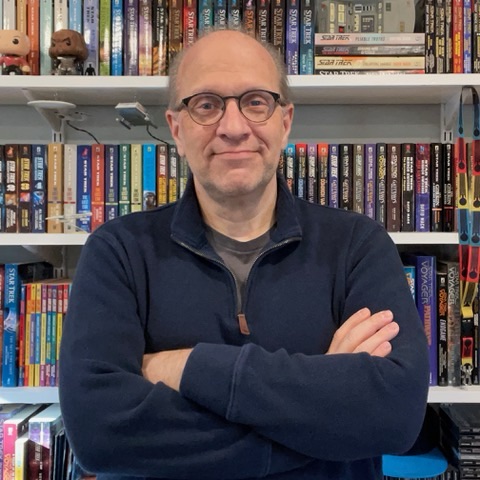
Hello, I’m Scott Pearson, a full-time freelance writer and editor. I’m currently the developmental editor of the Star Trek novels from Simon & Schuster, an editor and occasional writer for the Star Trek Adventures role-playing game, and the proofreader of the Star Trek comic books from IDW. I also proofread other comic books and graphic novels for IDW and copyedit novels and anthologies for Baen Books. I’m available for hire by indie authors looking to self-publish, primarily as a copyeditor but also as a proofreader. I specialize in science fiction, fantasy, mystery, and horror, with the occasional nonfiction book on the side.
Somewhere amongst all that I try to make the time to write! My published works so far are primarily short stories and novellas, though I have a long-suffering novel I’ve been working on now and then for more years than I care to admit to. I’ve also cowritten two IMAX space documentaries—Space Next and Touch the Stars—that have never been booked in the Twin Cities, so I’ve never seen my name on the big screen!
What genres do you write and why?
Most of what I write falls under the umbrella of science fiction, but I dabble in urban fantasy, mystery and crime, horror, and humor. I like to mix and match genres, so I’ve written sci-fi horror, military sci-fi, humorous stories in both sci-fi and mystery, and sci-fi set in the 1950s or the Victorian era. I’ve also written fiction with no real genre elements, just real-world stories about ordinary people. My first professional sale was a short story about a retired couple in the farm country of northern Minnesota. But science fiction remains the core of nearly everything I write.
My focus on sci-fi is primarily due to Star Trek; I’ve been a devoted fan for over fifty years. The original series just captured my imagination in the second grade; I would rush off the school bus to make it to the TV in time for the afternoon reruns. Then I started reading Ray Bradbury and Isaac Asimov in grade school, and they were big influences on my as well. All through high school I wrote sci-fi short stories. Decades later, one of my dreams came true when I became a published Star Trek writer, eventually publishing three short stories and two short novels with Simon & Schuster, leading to me becoming the copyeditor on the line for a decade.
What is your earliest memory of reading?
Probably a book called Dinosaurs and More Dinosaurs by M. Jean Craig, illustrated by George Solonevich, that I got through Scholastic Books in grade school. I still have it, yellowed with age and full of very outdated descriptions and depictions of dinosaurs. Come to think of it, my lifelong love of dinosaurs fits very well into my science fiction geekiness. You can connect them through King Kong, Land of the Lost, Ray Harryhausen films and so much more, decades before Jurassic Park.
When did you know you wanted to write? How did it happen?
I knew I wanted to be a writer by the time I was in seventh grade. A year or so before, a friend said she was going to write a novel, and I thought that sounded like fun, so I started writing one too. Hers was a romance novel; mine was a time travel story, very derivative, heavily influenced by (i.e., stealing from) various TV shows of the time as well as Jim Kjelgaard’s Fire-Hunter. I had no idea what I was doing, but I soon knew I loved writing and never wanted to stop making things up. I didn’t get very far in that first novel, but I sure wish I still had however many pages I scrawled in a notebook—it would make for hilarious/embarrassing reading!
What’s one of your favorite scenes in one of your books?
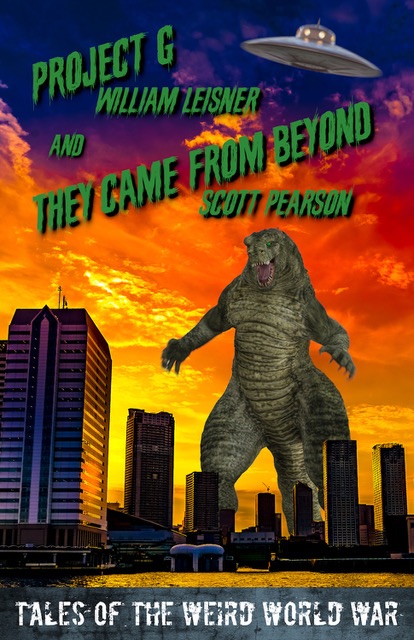
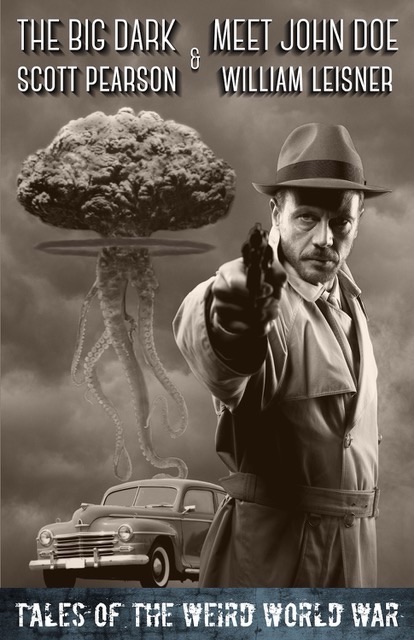
The dreaded “choose between your babies” question! Probably something out of The Big Dark, my first novella in the Tales of the Weird World War series I’m developing with my friend Bill Leisner. The series is about shape-shifting monsters that take human form and are invading our world beginning in the 1940s. My novella is about a private detective that has some of the earliest encounters with these beings. I wrote it in film noir style, playing off classic detective movies like Humphrey Bogart in The Big Sleep, using all the tropes—a troubled detective who used to be on the police force, his wife has left him, and now he drinks a little too much. It opens with him tailing a woman because her husband suspects her of having an affair. And naturally it’s in the first person; when I was writing it, I kept going back over and reading it aloud to make sure it felt like a world-weary voice-over narration. It was something I was just really satisfied with when I was done, and I think that opening scene set the tone and gave a solid sense of what was to come.
What makes a good character? A bad one?
It varies a bit depending on genre and the medium. In a big action movie, you often don’t need to understand why the bad guy wants to take over the world, bad guys are just gonna be bad. But in other films or in a novel I’m usually more demanding about character motivation, I want to understand why people behave the way they do, so a good character is one who is believable on some level, where given their character traits, you can accept the choices they make, no matter how much you may disagree with their logic or lack thereof. The layers of a well-drawn character make them seem real and their actions believable.
Conversely, a bad character has no discernible motivation behind their behavior, you can tell they just do things that further the plot no matter if it makes no sense or is just a stupid thing to do. The audience might be forgiving of that in a horror movie, where you go along with the trope of characters saying “I’m gonna go in the basement where I heard a creepy noise, even though the lights aren’t working and I heard in the news there’s an escaped serial killer.” But those sorts of cardboard characters don’t usually hold up in print, that’s just lazy writing.
If a writer needs a character to do something kind of stupid to further the plot, making that choice seem believable and organic for that character in that situation is the magic trick the writer needs to perform.
What moves the story for you?
An intriguing character or plot hook to draw me in, which is then sustained through increasing tension as the characters face further obstacles in whatever journey that drives the plot. That said, I can also appreciate a slow-burn story that meanders a bit, relying more on the characters to keep the reader involved, with that sense of building tension almost subliminal. Of course, all good stories containcharacter-driven and plot-driven elements, but some are definitely weighted more one way or the other.
What is your favorite book and why?
I’ll have to go with The Lord of the Rings. That’s the book I’ve reread the most times. (Sidebar: second most reread would likely be a tie between Frankenstein and Dracula, third most reread probably 1984.)
The why is the breadth and depth of Tolkien’s worldbuilding and characterizations. Especially during the first few readings back in high school, I felt completely transported to Middle-earth, it all felt so real, all the details of what was happening in the moment as well as the sense of history behind the story. And, of course, the richly drawn characters, each with their own motivations and quirks. You come to feel that you know them as much as actual people over the course of the three volumes.
What do you want to say to your audience?
Through my stories or person to person?
Through my work, I mostly just want to entertain readers with a compelling story that draws them in, but as I glance back over myshort stories and novellas, most of them feature characters caught up in difficult or seemingly impossible situations while they struggle to do the right thing: saving lives, treating people or various creatures fairly, trying to serve some ideal of justice. So I guess my basic message is to always fight the good fight—which is pretty much what most good stories do. That’s what’s going on in The Lord of the Rings, my aforementioned favorite book.
On a personal level, I would just say that I hope you’ve enjoyed my work and thanks for your support! I’ve gotten to meet readers at various book signings and conventions, and it’s always a blast talking with people that have read you or are about to. And I mustgive a special shout-out to all my fellow Star Trek fans!
What advice do you have for new writers?
One day a person could go into a big-box store and buy a pile of wood and a bunch of tools, but you probably wouldn’t want them to make your kitchen cabinets the next day. There are a whole lot of nuts-and-bolts details and craftsmanship for them to learn and practice before they could build something decent. You see where I’m going with this: Writing also needs to be learned and practiced, it’s a craft that should be nurtured and honed over time.
I encourage writers to take classes, get in writing groups, and write, write, write—then rewrite! I’m not saying writers need a degree, but classes and writing groups foster the ability to take criticism and learn from it, improving your skills and growing as a writer. Some writers can get into that mindset without formal classes, and that’s great. But for others, that kind of regular, structured feedback does wonders, especially if you’re lucky enough to get an amazing teacher—or a great group of writers to hang out with. Working with other writers in a group can be quite instructive, because you’ll spot speed bumps in others’ storytelling easily . . . and then you’ll realize that you’ve been doing the same thing in your own work. And don’t forget to read, read, read—all sorts of books, not just in whatever genre you tend to write. I read a lot of science fiction, but I also read mysteries, thrillers, horror, and nonfiction, mostly science. From what I said earlier about mixing genres, you can see how wider reading habits can feed back into whatever it is you write.
Do you have anything else you would like to add?
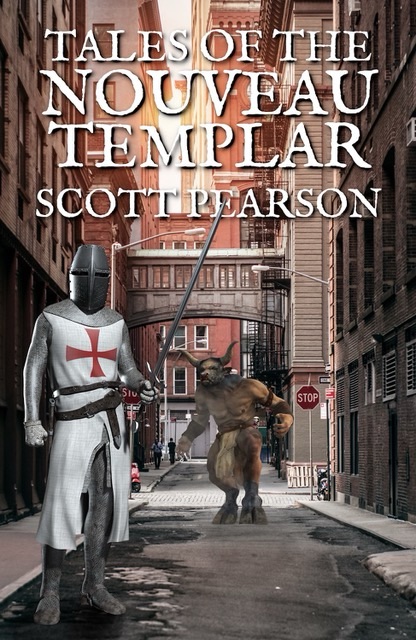
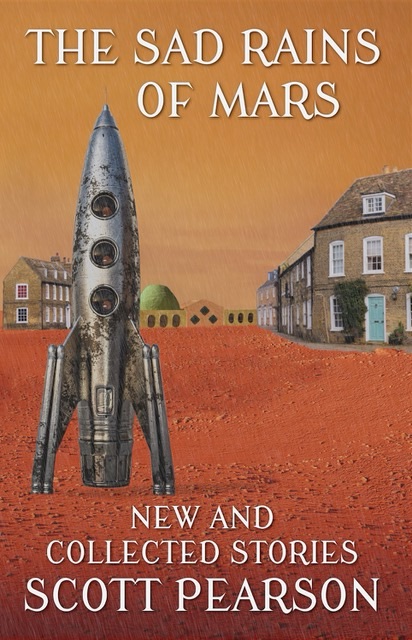
Well, this seems like the last chance to plug my self-published books! My most recent is The Sad Rains of Mars: New and Collected Stories, which brings together a dozen of my short stories across the science fiction spectrum: you’ll find military sci-fi, sci-fi/horror, retro sci-fi, and sci-fi/occult—there’s even a comedic Cthulhu story. Three of the stories, including the title piece, are available only in this collection, while the others are in various anthologies and one magazine. I mentioned above the Tales of the Weird World War series, of which there are currently two volumes; my friend Bill and I are currently working on our novellas for the third volume. And there’s my one excursion into urban fantasy, Tales of the Nouveau Templar, featuring a knight of the Crusades returned to life in a very different modern world populated by gods. You can find links to those—and to all the anthologies my stories have appeared in, if you prefer that approach—on my website, along with excerpts from all the stories.
Website: scott-pearson.com
Subscribe to our newsletter for updates and more!
 Action Pulp!
Leave a comment