February 5, 2026
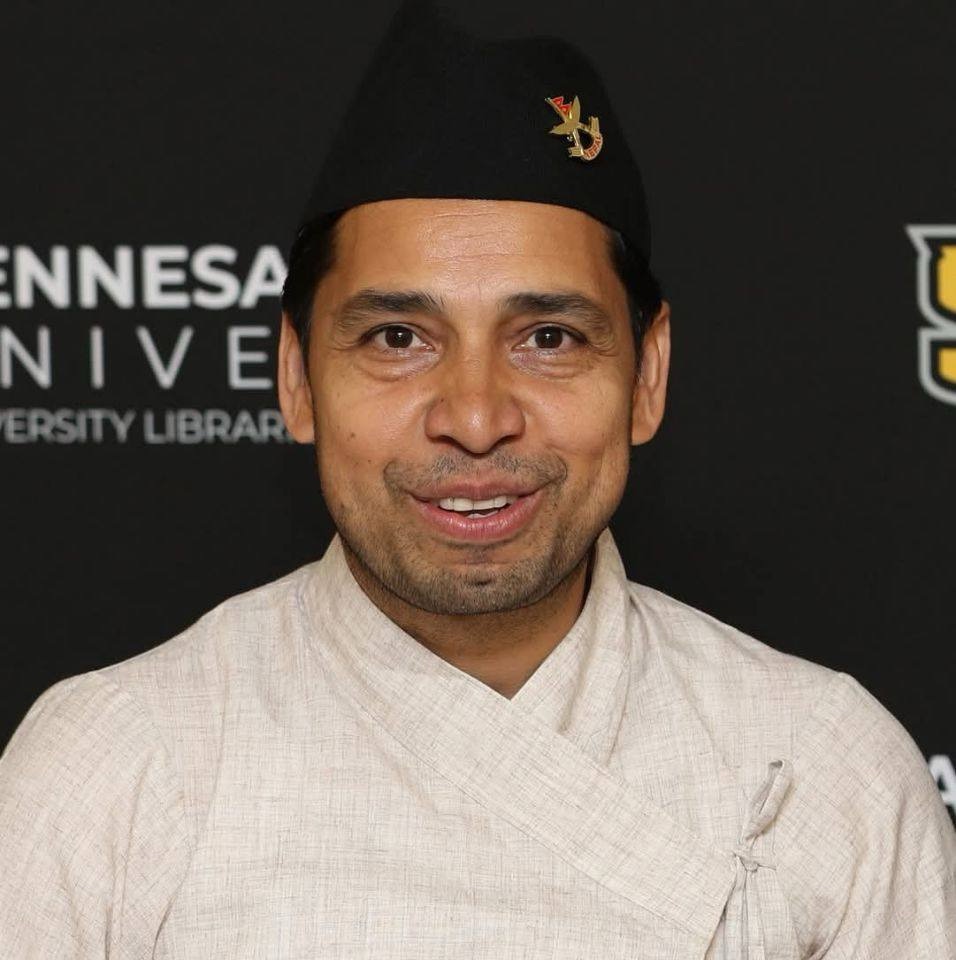
By Adam Messer
“Memoirs and nonfiction are the best medium for me to talk about my harrowing experiences and the emotions from the past and so many other things that I run into.” – Tulasi Acharya.
Nepali author Tulasi Acharya writes fiction, non-fiction and academic literature.
Please introduce yourself.
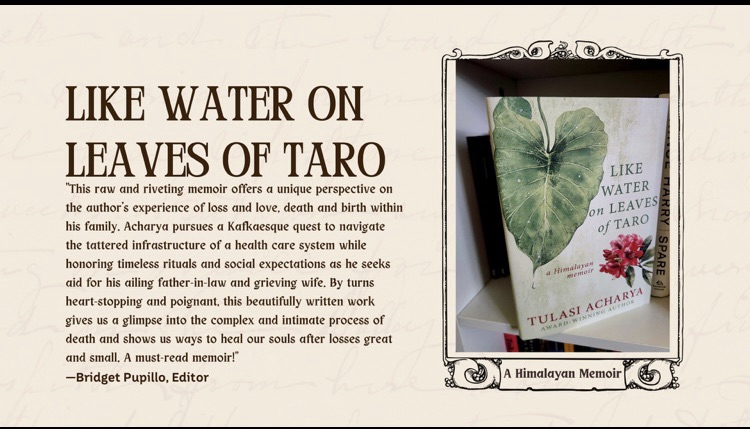
My name is Tulasi Acharya. Originally from Nepal, I moved to the United States in 2008 to further my studies. I hold an MFA in fiction and a PhD in Public Administration along with a few other degrees in writing and Women and gender studies and English literature. I have published over a dozen books including fiction, non-fiction and academic ones. Currently, I have been teaching English at South Georgia State College. My recent memoir is “Like Water on Leaves of Taro.”

What genres do you write and why?
I mostly write fiction, non-fiction and academic ones. I am equally interested in research and academic writing because I am in academia. Fiction help me explore many things that I may not be as effective as I could be when I need to due to different ethical and psychological constraints. Memoirs and nonfiction are the best medium for me to talk about my harrowing experiences and the emotions from the past and so many other things that I run into.
What is your earliest memory of reading?
I ended up reading many stories and articles and fiction when I was in my English Literature classes. What I can remember so far is Ernest Hemingway’s “The old man and the sea” and the statement in the novel “A man can be destroyed, but cannot be defeated.”
When did you know you wanted to write? How did it happen?
To be honest, when I was doing my Master’s degree in English literature while in Nepal around 2001, I had a feeling that I would rather love to read and write, but was not sure then. I was very much sure only when I came to the US in 2008 for my another master’s degree in Professional Writing and ended up writing my debut novel “Running from the Dreamland” in 2014 and that got good reviews on Amazon.com. Since then I thought I would continue to write. I wanted to write.
What’s one of your favorite scenes in one of your books?
There are many scenes I would like to read from my books. However, the most recent one, the memoir “Like Water on Leaves of Taro” has some good scenes detailing the surrounding and social, cultural milieu of Nepal and its city and countryside life.
What makes a good character? A bad one?
When a character grows within the story, whether that be the emotional, psychological or intellectual, I usually consider it as a good character, and just the opposite would, for me, be a bad character.
What moves the story for you?
If I can walk in the shoes of the character, if I can relate myself to the experiences of the character, If I can picture and visualize the situations in the story, that kind of thing usually moves me in the story.
What is your favorite book and why?
I think I would still say “Old man and the sea” but there are many books– fiction and nonfiction– that are my favorite. The list is exhaustive. The only reason is that they not only excite or interest me, but also impress and give me much insights about life, worldviews, characters’ perceptions of the world and help be travel the world that could be metaphorical, literal, philosophical and emotional.
What do you want to say to your audience?
If you want to know the culture outside the one you live in, read the author who writes in more than one language, for example, since I am originally from Nepal, I write both in English and Nepali.
What advice do you have for new writers?
Read good books. Know the characters. Read slowly. Write at least one page a day or read at least 10 pages a day.
Do you have anything else you would like to add?
Reading and writing simultaneously help you grow in many ways.
Website: www.tulasiacharya.com
Subscribe to our newsletter for updates and more!
 Action Pulp!
Leave a comment