
February 3, 2026
By Adam Messer
“Without mucus, your stomach would digest itself.” – Tim Waggoner.
Tim Waggoner is a writer and full-time tenured professor who crafts robust characters in his horror, dark fantasy and media tie-in novels.
Please introduce yourself.
I’m 62, married, have two adult daughters, and I’ve lived in southwest Ohio most of my life. I’ve published over sixty novels and eight collections of short stories. I’m a four-time winner of the Bram Stoker Award and a two-time winner of the Scribe Award. I’m a full-time tenured professor who teaches creative writing and composition at Sinclair College in Dayton, Ohio. My papers are collected by the University of Pittsburgh’s Horror Studies Program.
What genres do you write and why?
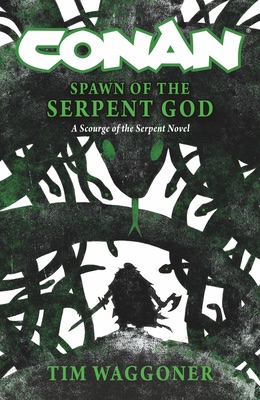
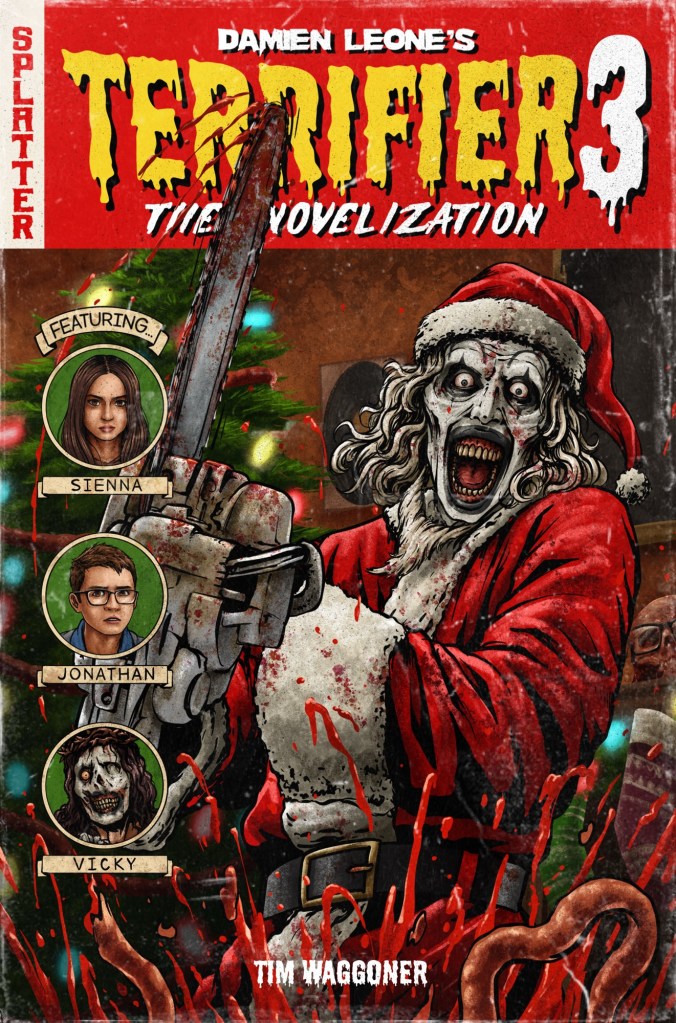
I write original dark fantasy and horror, as well as media tie-ins, and I’ve published several books on writing horror fiction. I’ve been a horror fan all my life, and dark stories and films stimulate my imagination more than anything else. I enjoy writing tie-in novels because it stretches my skills as a writer. One time, I may write an action-adventure story, the next time a sword and sorcery tale. As a writing teacher, I’m fascinated with the process of creating fiction, so it was only natural that I eventually wrote books on how to write horror.
What is your earliest memory of reading?
When I was four, my father would read nonfiction books about dinosaurs to me. I couldn’t read, but I memorized the shapes of their names so I could recognize them in the text. I thought reading was a “magic of the eyeballs” back then.
When did you know you wanted to write? How did it happen?
I’ve been telling stories all my life, whether it was making up scenarios for my friends and me to act out on the playground or drawing my own comic books in junior high and high school. But the true moment was when I read an interview with Stephen King in a 1980 issue of Dracula Lives B&W magazine. It was the first time I realized that someone could choose to become a writer, and that I could, too.
What’s one of your favorite scenes in one of your books?
In Nekropolis, there’s a vampire named Shrike who curses using words like “godd*mn it” and “Jesus Christ,” and each time he does this, his mouth bursts into flames. It’s a silly little throwaway gag, but it still makes me chuckle.
What makes a good character? A bad one?
Good characters are human in the sense that they’re a mix of good and bad, healthy and unhealthy, strong and weak. The specific mix of these elements is what makes characters individuals. Bad characters are flat ciphers, the prose equivalent of video game avatars who have no personality. They just move around and do things because the player makes them. Another type of bad character is the superhuman who has no flaws and who always succeeds. James Gunn avoided this problem in Superman by depicting Clark as a human with flaws and problems that can’t be solved by his powers.
What moves the story for you?
It depends on the story. It could be a fascinating character, a cool idea, an interesting world, an intriguing mystery, a fast-paced writing style, a slow-paced but beautifully written narrative, an intimate story focusing on one character, or a vast epic featuringmany characters. It just needs to have something that captures my imagination, draws me into the story, and holds me there until the end.
What is your favorite book and why?
I have a really hard time picking favorite books and movies, but my favorite reading experience was reading Catch-22 by Joseph Heller in my twenties. The paperback copy I had fell apart as I was reading it, which is a perfect metaphor for what happens in that novel.
What do you want to say to your audience?
I appreciate you, whether you’ve read one thing from me or have read everything I’ve ever written. There are so many things that compete for our time and attention in this world, and for you to use a small portion of your limited lifespan to read my words is a gift beyond measure.

What advice do you have for new writers?
Write with a close point of view from one character’s perspective. Many beginning writers write as if they’re passively watching events play out on a screen. They should write as if they are the character experiencing events. Writing is like acting in this way.
Do you have anything else you would like to add?
Without mucus, your stomach would digest itself.
Website: https://timwaggoner.com/
Subscribe to our newsletter for updates and more!
 Action Pulp!
Leave a comment